Article II General Provisions
Section 200 Gardening, Forestry, and Land Cultivation.
The non-commercial raising of crops, keeping of gardens, orchards, indoor hydroponics/aquaponics, forestry (including tree farms), and maple sugaring are not regulated by this Ordinance except as provided in Article IV, Section 401 and Section 410. Greenhouses, sugar shacks, and other such accessory buildings to these activities are subject to all applicable regulations of this Ordinance.
Section 201 Yard Requirements.
Except as otherwise provided herein, no building or structure other than accessory structures and buildings of 130 sq. ft. or less per Section 201.8 below shall occupy any part of any yard required by ARTICLE III, except that architectural details may extend not more than two (2) feet into any required yard and stairs and stairwells may extended not more than six (6) feet into any required yard.
201.1 Reduction for an Average Front Yard.
The required front yard may be reduced to the average front yard of the existing buildings on the same side of the street in the same block, provided that there are at least two (2) such buildings and provided that all such buildings are within 300 feet of the premises (as measured along the street line). This reduction shall not be allowed for lots fronting on a state highway.
201.2 (Reserved).
201.3 Lots on More Than One Street.
A lot adjoining two streets shall have a minimum front yard on each street and minimum side yards on the remaining sides. A lot adjoining three streets shall have minimum front yards on at least two intersecting streets, a minimum rear yard on the other street and a side yard on the remaining side.
201.4 Fences, Hedges and Walls.
Fences, hedges and walls may be located within minimum required yards, but if located within required front yards they shall not exceed 3 ½ feet in height unless set back at least 15 feet from the right-of-way. The Board of Adjustment, as a special exception, may allow fences, hedges and walls of a greater height. This section shall not apply to fences and walls erected for agricultural (e.g., the confinement of animals), safety or security purposes in the industrial, commercial or rural lands districts.
Fences, hedges and walls not in conformance with this section shall be discontinued.
*Note: Section 603.2 of the July 19, 1978 Zoning Ordinance provided that non-complying fences, hedges and walls be discontinued by July 18, 1983.
201.5 Flagpoles.
Flagpoles may occupy required yards.
201.6 Antennae, Satellite Dishes, Etc.
Radio, TV and communications antennae, satellite dishes and the like shall not occupy the areas of front yards or required side and rear yards; provided, however, that this restriction may be relaxed by special exception, if the Board of Adjustment finds, in addition to the standards set forth in Section 801.3, that such a relaxation is required by applicable federal regulations and RSA 674:16, IV, in order to reasonably accommodate such facilities.
201.7 Driveways and Parking Areas.
Driveways may occupy required yard areas. Parking areas may occupy required yard areas provided they maintain at least a 5 ft. setback from all lot lines, except that (i) parking areas in the front yard are prohibited in the LD District per Section 307.9.B, and (ii) for all uses other than one- and two-family dwellings for which a portion of the driveway occupies the required front yard, parking areas in the front yard in the residential districts, the R-O District, and the R-O-1 District, shall be set back no less than the lesser of the minimum front yard requirement or the front building line, but in no case less than five (5) feet.
201.8 Accessory Structures and Buildings of 130 Square Feet or Less.
One-story detached accessory structures and buildings of 130 sq. ft. or less and not exceeding twelve (12) feet in height may be located within the minimum required side and rear yards, in all zoning districts, provided they are placed a minimum of 5 feet from the side and rear property lines. A zoning permit shall be required for an accessory building.
201.9 Accessory Renewable Energy Systems.
Accessory renewable energy systems shall not occupy the areas of required front, side and rear yards (a.k.a. front, side and rear setbacks). This restriction may be relaxed by special exception, if the Board of Adjustment finds, in addition to the standards set forth in Section 801.3, that such relaxation is required for the reasonable use of the proposed system.
Section 202 Reduction of Lot Area or Dimensions.
The configuration of a lot shall not be altered so that the area, yards, lot width, frontage, coverage or other requirements of this Ordinance are less than the minimums required herein. This requirement shall not apply when part of a lot is taken for a public purpose.
Section 203 Height Requirements.
203.1 Exceptions to Height Requirements.
Except as provided in Section 407 for structures near the airport or in the airport approach zone, the following structures may exceed the maximum height limitations of ARTICLE III by not more than 20 percent:
A. Flagpoles.
B. Rooftop features including chimneys, spires, towers, lightning rods, heating, ventilation and air-conditioning equipment, elevator shafts, accessory solar energy facilities or similar structures/equipment.
C. Radio or TV antennae or satellite dish for private, non-commercial reception.
D. Accessory wind energy facilities, except as provided in Section 203.3.
E. Silos, except that the Board of Adjustment may allow a greater height for silos in the RL Districts by special exception granted pursuant to Section 801.3.
203.2 Commercial Television or Radio Broadcast Station Antennas and Towers.
Commercial television or radio broadcast station antennas or towers allowed by special exception in RL Districts shall be exempt from the maximum height limits of Section 312, Section 313 and Section 314, except as provided in Section 407; provided, however, that in addition to the findings required by Section 801.3, the Board of Adjustment shall also find:
- A. That the proposed height of the antenna and associated structures such as towers is the minimum height permitted by federal regulations for the frequency and type of broadcast signal to be used by the applicant, in light of best available technology, and that no additional height is being sought solely to increase the range of the signal; and
- B. That there are no feasible alternative sites within the RL Districts of the City where the facility could be located with significantly less visual impact on the neighborhood and City as a whole, due to reduced height needs, reduced visibility, or other site advantages.
To show that these standards are met, the applicant shall furnish the Board with a written impact analysis prepared by a professional radio frequency engineer familiar with both the technology and the regulatory framework for the type of station proposed. The analysis shall not be conclusory, but shall detail the applicant’s specific objectives, and shall evaluate and compare specific alternative technologies, and the suitability and visual impacts of specific alternative sites within the City, using viewshed maps and photo simulations. The Board of Adjustment may, at the applicant’s expense, hire a person, with such qualifications as the Board may determine, to review the analysis. The Board may require additional information as needed to decide the case.
203.3 Accessory Wind Energy Facilities.
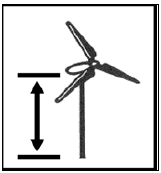
Accessory wind energy facilities may exceed the Section 203.1 exception to the maximum height limits in RL Districts (Sections: Section 312, Section 313 and Section 314) by special exception, except as provided in Section 407 (the more restrictive Section applies). In addition to the findings required by Section 801.3, the Board of Adjustment shall also find that the proposed tower height (ground to top of the tower as illustrated) shall be restricted to 35 feet above the average height of the tree canopy within 300 feet of the base of the tower. The maximum wind energy facility tower height shall be 120 feet. (Section 612.2 specifies required setbacks for accessory wind energy facilities.)
203.4 Telecommunication Facilities.
- A. Location of Telecommunication Facilities:
- 1. Collocation or Modification. Any telecommunications facility whose installation meets the definition of "collocation" in RSA 12-K:2, X or which constitutes a "modification" as defined in RSA 12-K:2, XVIII, with respect to any facilities or structures in existence as of September 22, 2013 (but excluding "substantial modification" of such existing facilities or structures, as defined in RSA 12-K:2, XXV) shall be deemed to be a permitted use in all zoning districts. As set forth in RSA 12-K:10, I, applications for such collocation or modification shall be reviewed solely for conformance with applicable building code and building permit requirements, within the time frame set forth in RSA 12-K:10, II and III, and shall not be subject to zoning regulations, planning board review or any public hearing requirement.
- 2. Installation On Structures Later Erected For Other Purposes. Any telecommunications facility installed upon a building or structure erected subsequent to September 22, 2013, but which was, at the time of erection, neither intended nor designed for the mounting of telecommunications facilities, shall also be a permitted use in all districts, with the approval of a conditional use permit from the Planning Board, so long as the installation of the telecommunications facilities does not increase the height or footprint, or alter the overall profile, of the said building or structure.
-
3. Facilities Other Than Collocation or Modification. Telecommunication facilities requiring a new dedicated tower or other structure, or which otherwise do not fit within paragraphs A.1 or A.2 above, shall be:
- a. Permitted in the Industrial, General Commercial, and Medical Center zoning districts by conditional use permit;
- b. Allowed by special exception in the RL zoning districts and,
- c. Prohibited in all other zoning districts.
- B. Other Use And Siting Factors.
- 1. Primary or Accessory Use. If sited in compliance with the provisions of Subsection A above, telecommunications facilities may be considered either principal or accessory uses. Neither the existence nor absence of a permitted use already on a lot or site shall be deemed to preclude the installation of a telecommunications facility on that same lot or site, as long as all other provisions of the Ordinance are met.
- 2. Dimensional Requirements. All district regulations relating to minimum yard setbacks and building coverage, as set forth in the tables in Article III, shall apply to telecommunications facilities, unless the zoning board of adjustment grants special exception relief pursuant to Section 201.6.
- 3. Nonconforming Uses. Telecommunications facilities which are installed in compliance with the provisions of this section shall not be deemed to create or constitute an unlawful expansion of any previously existing nonconforming use or structure on the lot.
-
4. Subsequent Changes To Facilities.
- a. In general, for any telecommunications facilities which are installed pursuant to a special exception or conditional use permit, or both, either before or after the effective date of this Section, no alteration which increases the height or footprint or substantially alters the profile of such facilities shall be permitted in the absence of a new or modified special exception and/or conditional use permit, as applicable.
- b. The rule in Subsection B.4.a above shall not apply if the proposed alteration constitutes "collocation" or "modification" with respect to structures or facilities which existed prior to September 22, 2013, as set forth in Section A.1 above.
- c. Lawfully existing towers, antennas and other telecommunications equipment may be replaced in kind, without the need to obtain a new or modified conditional use permit or special exception.
- C. Construction Performance Requirements. Except where specifically exempted under RSA 12-K:10, all telecommunications facilities shall meet the following standards:
- 1. Federal Requirements. All telecommunications facilities must meet or exceed current standards and regulations of the FAA, FCC, and any other agency of the federal government with the authority to regulate such telecommunications facilities.
- 2. Height. The height of a dedicated tower or structure shall not extend more than 20 feet above the average tree canopy. The height of an antenna mounted on an existing building or structure shall not exceed the height limitations of the zoning district and Section 203, unless a variance is granted by the Zoning Board to allow a greater height.
"Average Tree Canopy," for purposes of this Section, means the average height found by inventorying the height above ground level of all trees over 20 feet in height for a radius of 200 feet. All efforts should be made to keep tower height at a minimum, and in no case shall a tower or antenna exceed 200 feet regardless of the average tree canopy.
- 3. Setbacks and Separation. In addition to compliance with the minimum zoning district setback requirements (Subsection B.2 above), all dedicated tower and structures shall be set back a distance equal to 125% of the height of the tower from all property lines (i.e. fall zone).
- 4. Security Fencing. Towers and associated equipment shall be enclosed by security fencing not less than six (6) feet in height and shall also be equipped with an appropriate anti-climbing device.
- 5. Landscaping. A buffer shall be provided that effectively screens the view of the compound from adjacent property. The standard buffer shall consist of a landscaped strip at least 10 feet wide outside the perimeter of the compound.
- 6. Visual Impacts. In locations where the visual impact of the compound would be minimal or non-existent, the landscaping requirement may be reduced or waived entirely by the Planning Board.
- 7. Existing Trees. Existing mature tree growth and natural land forms on the site shall be preserved to the maximum extent possible. In some cases, such as towers on large wooded lots, natural growth around the property may be deemed a sufficient buffer.
-
8. Camouflaging:
- a. At a tower site, the design of the buildings and related structures shall, to the maximum extent possible, use materials, colors, textures, screening, and landscaping that will blend the tower telecommunications facilities with the natural setting and built environment.
- b. If an antenna is installed on a structure other than a tower, the antenna and supporting electrical and mechanical equipment must be of a neutral color that is identical to, or closely compatible with, the color of the supporting structure so as to make the antenna and related equipment visually unobtrusive.
- 9. Balloon Test. The applicant shall provide notice of a date on which a balloon (or balloons) will be floated at the proposed dedicated tower site at the discretion of the Planning Board, and provide pictures from all locations around town and within 20 miles from which the balloon(s) is visible. The Planning Board, at its discretion, may also require balloon test for antennas mounted on existing buildings and structures if not hidden or camouflaged.
- D. Procedure:
- 1. Unless specifically exempted under Subsection A.1 of this Section, telecommunications facilities are permitted only after obtaining a conditional use permit or special exception as required under Subsection A.3. All such uses must comply with other applicable ordinances and regulations of the City of Lebanon, State of New Hampshire, and Federal Government.
- 2. Telecommunications facilities requiring a new dedicated tower or other structure, or which otherwise do not fit within Subsections A.1 or A.2, shall obtain site plan approval from the Planning Board which shall act upon the site plan application in accordance with the procedural requirements of the Site Plan Review Regulations, provided that regional notification requirements contained in RSA 12-K:7 must also be followed.
- 3. Basic plan submission requirements shall be the same as stated in the Planning Board's Site Plan Review Regulations to any and all extent such regulations are applicable.
-
4. Other Information Required. In order to assess compliance with these regulations, the Planning Board shall normally require the applicant to submit all of the following prior to any approval by the Board; provided, however, that the Board may waive any of these requirements if the Board finds that the spirit of the Ordinance can be fulfilled without such submission.
- a. Propagation map showing proposed radio frequency coverage.
- b. Photographic documentation of the balloon test(s).
- c. Studies and analysis of alternative sites or layouts that have been considered for providing coverage, including potential sites outside the City.
- d. A proposed agreement, or condition of approval, which will allow for the maximum allowance of collocation upon any new structure. Such statement shall, at a minimum, require the applicant to permit feasible collocation for reasonable fees and costs to other wireless telecommunication providers. Compliance with this requirement shall not, in and of itself, constitute a justification for excessive height, or for the failure to adequately analyze alternatives.
- e. Copies of any federal license or permit from the FCC proving that the applicant is eligible to institute its system pursuant to the Federal Telecommunications Act of 1996, or other applicable statute.
- f. Detailed maps showing all of the carrier's current externally visible tower and monopole locations in the state within a 20-mile radius, both active and inactive; and Site descriptions for each of the above locations showing the antenna height and diameter, and all externally visible structures. [Note: The purpose of this information is not to enable the Board to evaluate an applicant's business decisions, contrary to RSA 12-K:11, I(a), but rather to assist the Board to evaluate the relative engineering effectiveness of coverage alternatives, in conjunction with Paragraph D.4.c above.]
- E. Removal of abandoned telecommunication antennas and towers: Any antenna or tower that is not operated for a continuous period of 12 months shall be considered abandoned and hazardous to the public health and safety, unless the owner of said tower or antenna provides proof of quarterly inspections. The owner shall remove the abandoned structure within 90 days of receipt of a declaration of abandonment from the City. A declaration of abandonment shall only be issued following a public hearing, noticed per the Planning Board's Site Plan Review regulations, with notice to abutters and the last known owner/operator of the tower. If the abandoned tower is not removed within 90 days, the City may execute any security and may cause the tower to be removed. If there are two or more users of a single tower, this provision shall not become effective until all users cease using the tower.
203.5 Bonding and Security for Towers and Similar Structures.
Whenever the Planning Board or the Zoning Board (in the event that site plan review is not required) approves an application to construct a tower or similar structure which, if abandoned and unmaintained, could present a hazard to health or safety from a potential fall or collapse, including but not limited to broadcast antennas or towers under Section 203.2, telecommunications towers under Section 203.4, or wind energy facilities under Section 203.3, the respective Board shall require the applicant to provide a bond or other security to the City in an amount sufficient to cover the costs of removal and disposal of such structure. The Board shall set the form and amount of the security. Any engineer, attorney, or other consultant engaged by the Board to determine the adequacy of the form and amount of security shall be at the applicant’s expense. The Board shall also require the applicant to submit proof of appropriate liability insurance with respect to the proposed structure prior to construction.
Section 204 Lots in Two Zoning Districts.
Where a district boundary line divides a lot of record at the time such district boundary line is established, the regulations for either district of such lot may extend up to thirty feet (one hundred feet in rural lands districts) into the other district, provided the lot has frontage on a street in the district which is being extended, and provided that the lot has not been altered by subdivision, merger, or lot line adjustment subsequent to the establishment of the district boundary.
If such lot is located in a single zoning district along the entire length of its frontage and the size of the overall lot meets or exceeds the minimum required lot area for that zoning district, the entirety of the property may be used for any use allowed in that zoning district provided that that zoning district is more restrictive than the other zoning district(s) in which the property is located.
Section 205 One Principal Structure per Residential Lot.
There shall be only one principal structure on a lot in the residential districts, R-O district, and R-O-1 district, except when:
- 205.1 Approved pursuant to the PUD provisions of this Ordinance or as a cottage development per Section 509; or
- 205.2 When the project involves solely the permitted remodeling or reconstruction of existing buildings, or when constructing new buildings for multi-family use, as otherwise permitted by this Ordinance; or
- 205.3 When the project involves a group residence, provided that site plan approval is obtained from the Planning Board.
Section 206 Sight Distance at Street and Driveway Intersections.
There shall be no obstruction to vision between the heights of three (3) feet and ten (10) feet above the street surface within any triangular area formed by the intersection of two street lines and a third line joining them at points 25 feet away from their intersection, or by the intersection of a driveway and a street line and a third line joining them at points 25 feet away from their intersection. The Board of Adjustment may grant a special exception to this requirement, pursuant to Section 801.3, in the commercial and industrial districts only.
Section 207 Yard Sales.
A yard sale from any one location shall not be considered a use regulated under this Ordinance, providing that it does not occur more than twice within any calendar year for a period of not more than two consecutive days each and does not contain items purchased expressly for such sale. Any such type of sale exceeding these limits shall conform to the provisions of this Ordinance and shall require a zoning permit.
Section 208 (Reserved).
Section 209 Manufactured Housing.
Manufactured housing units are permitted only in manufactured housing parks or in manufactured housing PURDs. See Section 503 (“MANUFACTURED HOUSING PARKS”) and Section 504 (“MANUFACTURED HOUSING PURDs”).
Section 210 Open Building Excavations.
Within six months after work on an excavation for a building has begun, the excavation shall be covered (such as with building construction) or filled to normal grade. For safety purposes, excavations with slopes exceeding one horizontal to two vertical shall be protected by a fence at least four feet in height.
Section 211 Temporary Uses and Structures.
211.1 General.
Temporary uses such as tent sales, temporary greenhouses, trailer storage and box trailer sales (whether such trailers are registered or unregistered), which are accessory to the principal use of a lot, may be permitted for not more than 60 days per year. Such uses shall take place only in use districts where they are allowed and shall comply with all yard and parking requirements of this Ordinance. All such uses shall require a zoning permit except for box trailers.
If such temporary uses occur in subsequent years, the City may require site plan review. If such uses are in accordance with an approved site plan they may exist for 120 days per year, except for box trailers and container units, which are governed by Subsection 211.2.
211.2 Box Trailers.
In all districts except the residential districts, box trailers, whether registered or unregistered, are permitted for more than 60 days, provided:
A. Trailer Criteria.
- 1. The use of trailers shall be accessory to the principal use of the lot.
- 2. Trailers shall set on inflated tires (except sea boxes and the like).
- 3. The exterior of trailers shall be well maintained and free of rust.
- 4. Trailers shall not be used for advertising purposes.
- 5. Trailers shall not be lighted.
- 6. Trailers shall not be used to store hazardous and/or inflammable liquids, materials, products or wastes, including but not limited to petroleum.
B. Location of Trailers.
Box trailers shall not occupy required yard spaces or parts of lots which provide required parking or which are necessary for traffic flow, safety or landscaping requirements.
C. Density.
- 1. No more than 10 percent of the lot area may be occupied by trailers.
- 2. No more than six (6) trailers shall be permitted on a lot or business premises.
D. Converted Motor Vehicles.
The conversion of buses, motor homes, recreational vehicles and other motor vehicles for storage use or other temporary use is prohibited.
E. Zoning Permits.
- 1. The siting of box trailers permitted pursuant to this subsection shall require a zoning permit. The purpose of the permit is to establish approved locations for trailers of a certain size. Replacement trailers of the same or smaller size may occupy the same locations without obtaining a permit for each trailer provided that each replacement trailer shall comply with all other provisions of this Ordinance.
- 2. Permits shall be renewed annually after review for compliance with this subsection.
- 3. A permit may be revoked or not renewed for locations having trailers or containers that do not comply with the requirements of this subsection.
- 4. The City may require a reasonable fee for such zoning permits and the annual renewal thereof.
F. Compliance.
All box trailers shall comply with these requirements or be removed from the premises by October 31, 1992. Box trailers located in the residential districts prior to September 28, 1990, are vested against the prohibition in those districts, but such trailers shall comply with all other requirements of this subsection.
211.3 Incidental to Construction.
Temporary permits may be issued by the Zoning Administrator for a period not exceeding one year for non-conforming uses and\or non-conforming structures incidental to construction projects, provided such permits are conditioned upon agreement by the owner to remove the structure or use upon expiration of the permit. Such permits may be renewed, upon application, for an additional period of one year as long as construction is active.
211.4 Temporary Structures for Permitted Uses.
Temporary structures to house uses permitted in the GC, GC-1, IND-H, IND-L, or MC Districts are permitted in such districts, for one year, provided:
- A. The applicant certifies that an application for site plan approval for building construction or expansion to accommodate the use located in the temporary structure will be submitted.
- B. The site plan application is submitted within six (6) months of the issuance of a zoning permit for the temporary structures. If the required site plan application is not submitted within six (6) months, the zoning permit for the temporary structure shall be revoked.
- C. If site plan review approval is received the zoning permit may be extended for an additional year.
- D. The temporary structures shall not be located in the front yard or within the required side or rear yards.
211.5 Temporary Structures on Vacant Lots.
Temporary structures/uses on vacant lots shall conform to all requirements of the Zoning Ordinance. All such structures/uses shall be required to obtain a zoning permit.
211.6 Hawkers, Peddlers and Itinerant Vendors.
In addition to any applicable requirements of this section, hawkers, peddlers and itinerant vendors shall comply with RSA Chapters 320 and 321 and all other applicable local Ordinances.
211.7 Compliance.
All temporary uses and structures existent at the date of enactment of this Ordinance shall comply with the provisions of this section within sixty (60) days thereof.
Section 212 Anti-Nuisance Standards.
212.1 General.
No use shall emit noise, odors, dust and smoke that is obnoxious, harmful or a nuisance to abutting properties or the neighborhood. Noise, odors and dust emitted by farming uses, including the keeping of livestock and poultry, that were existent as of the date of enactment of this Ordinance are exempt from this provision.
212.2 Noxious Gases.
No use shall emit any noxious gases which endanger the health, comfort, safety or welfare of any person, or which may have a tendency to cause injury or damage property, business or vegetation.
212.3 Vibration.
No use shall cause, as a result of normal operations, a vibration which creates displacement of 0.002 of one inch.
212.4 Vision Impairment.
No use shall have lighting or signs which create glare which would impair or obstruct the vision of a driver of any motor vehicle.
212.5 Fire, Explosion or Safety Hazard.
No use shall be such so as to potentially cause a fire, explosion or safety hazard.
Section 213 Impact Fees.
213.1 Authority.
These regulations are authorized by New Hampshire RSA 674:21, V, and other pertinent state law, as an innovative land use control. Under this authority, new development in the City of Lebanon may be assessed impact fees in proportion to its demand on the public capital facilities of the City and the School District.
213.2 Purpose.
The following regulations shall govern the assessment of impact fees for public capital facilities to accommodate the demands of new development on these facilities. These provisions are intended to:
- A. Assist in the implementation of the Master Plan and Capital Improvements Program;
- B. Provide for the public capital facilities necessitated by new development;
- C. Assess an equitable share of the cost of public capital facilities to new development in proportion to the facility demands of new development.
213.3 Definitions.
The following definitions shall be considered to pertain to this Section (213) only:
- A. Assessed property means any land or buildings comprising new development that is subject to an impact fee assessment.
- B. Assessment with respect to an impact fee means a notification issued to an assessed property by the City of Lebanon, its Planning Board, or its Building Inspector, stating the amount of an impact fee due and the conditions or schedule for its collection.
- C. Collection or collected with respect to an impact fee means the actual delivery of payment of the fee to the City of Lebanon on behalf of an assessed property.
- D. Impact fee means a fee or assessment imposed upon development, including subdivision, building construction or other land use change, in order to help meet the needs occasioned by the development for the construction or improvement of capital facilities owned or operated by the municipality, including and limited to water treatment and distribution facilities; wastewater treatment and disposal facilities; sanitary sewers; storm water, drainage and flood control facilities; public road systems and rights-of-way; municipal office facilities; public school facilities; the municipality's proportional share of capital facilities of a cooperative or regional school district of which the municipality is a member; public safety facilities; solid waste collection, transfer, recycling, processing and disposal facilities; public libraries; and public recreation facilities, not including public open space.
-
E. New development means an activity that results in:
- (1) The creation of a new dwelling unit or units or new manufactured housing; or
- (2) The conversion of a legally existing use, or additions thereto, which would result in a net increase in the number of dwelling units; or
- (3) Construction resulting in a new non-residential building or a net increase in the gross floor area of any non-residential building; or
- (4) The conversion of a lawful existing use to another use if such change would result in a net increase in the demand on public capital facilities that are the subject of impact fee assessment.
- (5) A net increase in a residential building's gross floor area greater than 500 square feet.
Notwithstanding the above, new development shall not include:
- a. The creation of any new studio or one-bedroom accessory dwelling unit with a gross living area of 500 sq. ft. or less;
- b. The replacement of an existing manufactured housing unit or any existing dwelling unit; or
- c. The reconstruction of a structure that has been destroyed by fire or natural disaster where there is no change in size, density, or type of use that would increase the demand on capital facilities for which impact fees are assessed.
- F. Off-site improvements means those improvements that are necessitated by a development but which are located outside the boundaries of the property that is subject to a subdivision plat or site plan approval by the Planning Board. Such offsite improvements shall be limited to any necessary highway, drainage, and sewer and water upgrades pertinent to that development.
- G. Public open space means a parcel of land essentially unimproved and available to the public only for passive recreational use or natural resource conservation. City parks which do not include "public recreation facilities" constitute public open space within the meaning of this Paragraph.
- H. Public recreation facilities means the land and facilities owned or operated by the City of Lebanon, other than public open space, which are designed for the conduct of recreational sports, or other active leisure uses that include use of equipment, structures, or other improvements to the land to provide active indoor or outdoor public recreation programs or activities. Public recreation facilities shall include recreational improvements to conservation or open space lands, for example walking, hiking, or skiing trails for active recreation.
- I. School District means the Lebanon School District.
213.4 Authority to Assess Impact Fees.
The Planning Board is hereby authorized to assess impact fees upon new development, as herein defined, and in accordance with the standards herein set forth. The Planning Board shall have the authority to adopt regulations to implement the provisions of this Ordinance and to delegate the administrative functions of impact fee assessment, collection and disbursement.
213.5 Standards and Basis of Assessment.
- A. The amount of any impact fee shall be a proportional share of public facility improvement costs which are reasonably related to the capital needs created by the development, and to the benefits accruing to the development from the capital improvements financed by the fee.
- B. The Planning Board may prepare, adopt, or amend studies, reports, or cost allocation procedures that are consistent with the above standards, and which define a basis for impact fee assessment for public capital facilities, and the impact fee assessment schedules therefore.
- C. No methodology, cost allocation procedure, or other basis of assessment, nor related impact fee schedules, or changes in the basis of assessment or the fee schedules, shall become effective until it shall have been the subject of a public hearing before the Planning Board, in accordance with RSA 675:6 and :7.
- D. In the case of new development created by conversion or modification of an existing use, the impact fee shall be based upon the net positive increase in the impact fee assessed for the new use for each category of impact fee assessment as compared to the highest impact fee that was or would have been assessed for each category of impact fee assessment for the previous use in existence on or after the effective date of this Ordinance.
- E. Upgrading of existing facilities and infrastructures, the need for which is not created by new development, shall not be paid for by impact fees.
213.6 Review and Change in Assessment Schedules.
The impact fee assessment schedules shall be reviewed periodically by the Planning Board, along with the foundation documents that provide the basis for the assessment schedules. Such review may result in recommended adjustments in one or more of the fees based on the most recent data as they affect the variables in the fee calculations. Changes in the impact fee assessment schedules shall be effective only where the change in the basis of assessment or the fee schedule is adopted following a public hearing on the proposed change.
213.7 Assessment and Collection of Impact Fees.
- A. Where subdivision or site plan approval is required for new development, impact fees shall be assessed at the time of Planning Board approval of a subdivision plat or site plan.
- B. When no Planning Board approval is required, or has been made prior to the adoption or amendment of the impact fee Ordinance, impact fees shall be assessed prior to, or as a condition for, the issuance of a building permit.
- C. Impact fees shall be collected at the time a certificate of occupancy is issued. If no certificate of occupancy is required, impact fees shall be collected at the time when the development is ready for its intended use.
- D. The Planning Board and the assessed property owner may establish an alternate, mutually acceptable schedule of payment of impact fees. If an alternate schedule of payment is established, the Planning Board may require the applicant to post security, in the form of a cash bond, letter of credit, or performance bond so as to guarantee future payment of assessed impact fees.
213.8 Waivers.
A. The Zoning Administrator may administratively grant full or partial waivers of impact fees to an assessed property where the Administrator, based on credible evidence presented by the applicant, finds that one or more of the following criteria are met with respect to the particular public capital facilities for which impact fees are normally assessed:
- 1. An assessed property may apply for a full or partial waiver of public school impact fees for those residential units that are lawfully restricted to occupancy by senior citizens age 62 or over in a development that is also maintained in compliance with the provisions of RSA 354-A: 15, Housing For Older Persons. The Zoning Administrator may waive school impact fee assessments on restricted-occupancy units where it finds that the dwelling unit will be bound by lawful deeded restrictions on occupancy by senior citizens age 62 or over for a period of at least 20 years.
- 2. An assessed property may apply for a full or partial waiver of public school impact fees for those studio or one-bedroom residential units that have a gross living area of 500 sq. ft. or less.
B. The Planning Board may grant full or partial waivers of impact fees to an assessed property where the Board based on credible evidence presented by the applicant finds that one or more of the following criteria are met with respect to the particular public capital facilities for which impact fees are normally assessed:
- 1. An assessed property may apply to the Planning Board for a full or partial waiver of impact fee assessments imposed by this Ordinance on the basis of other contributions toward public capital facilities. The amount of such a waiver shall not exceed the value of land, facilities construction, or other contributions for public capital facilities. The value of on-site and off-site improvements which are required by the Planning Board as a result of subdivision or site plan review, and which would have to be completed by the developer, regardless of the impact fee provisions, shall not be considered eligible for waiver under this Ordinance. The value of contributions or improvements shall be credited only toward facilities of like kind, and may not be credited to other categories of impact fee assessment. All costs incurred by the City for the review of a proposed waiver, including consultant and counsel fees, shall be paid by the applicant.
- 2. The Planning Board may waive an impact fee, in whole or in part where, in the opinion of the Board, in consultation with the Board's legal counsel, such fee would, due to interference with constitutionally-vested rights, pose an unnecessary hardship to the applicant and waiver would not be contrary to the spirit and intent of this Ordinance.
A waiver request made pursuant to the subsection shall require a public hearing before the Planning Board but shall not require notice to abutters. Norice of the public hearing shall be posted in at least two (2) public places and shall be published in a newspaper of general circulation in Lebanon not less than ten (10) nor more than thirty (30) days before the date of the meeting at which the request will be considered.
213.9 Appeals under This Section.
- A. A party aggrieved by a decision made by the Zoning Administrator relating to administrative decisions in the assessment or collection of impact fees authorized by this Section may appeal such decision to the Planning Board within 30 days of the administrative decision, and not afterward.
- B. As set forth in RSA 676:5, III, a party aggrieved by a decision of the Planning Board under this Section may not appeal to the Zoning Board of Adjustment, but may appeal to the Grafton County Superior Court as provided by RSA 677:15, as amended.
213.10 Administration of Impact Fees.
- A. All funds collected shall be properly identified and promptly transferred for deposit into an individual public capital facilities impact fee account for each of the categories under which impact fees are assessed, and shall be used solely for the purposes specified in this Ordinance. Impact fee accounts shall be segregated, nonlapsing accounts which shall under no circumstances be commingled with the City's general fund.
- B. Impact fees shall be paid out or applied to the provision of public capital facilities only upon specific authorization by the City Council.
- C. The City shall record all fees paid, by date of payment, name of the person making payment, and the parcel, lot or building for which the fee has been paid. The City shall maintain an updated record of the current ownership, tax map and lot reference number of each property for which an impact fee has been paid and the amount of that fee for a period of at least six (6) years.
- D. Funds withdrawn from the public capital facilities impact fee accounts shall be used solely for the purpose of acquiring, constructing, expanding or equipping public capital facilities or improvements made within the individual categories established by the fee schedules and basis of assessment adopted by the Planning Board.
- E. In the event that bonds or similar debt instruments have been issued for public capital facilities which were constructed in anticipation of new development, or are issued for advanced provision of capital facilities identified in this Ordinance, impact fees may be used to pay debt service on such bonds or similar debt instruments.
213.11 Refund of Fees Paid.
-
A. A refund shall be made to the owner of record of an assessed property for which an impact fee has been paid, where:
- 1. The calculation of an impact fee has been predicated upon some portion of capital improvement costs being borne by the City or the School District, and the City, or in the case of school impact fees the School District, has failed, within the period of six (6) years after the date of the payment of such fee, to appropriate the municipal share of related capital improvement costs; or
- 2. The impact fee has not been encumbered or otherwise legally bound to be spent for the purpose for which it was collected within a period of six (6) years after the date of the payment of the fee.
- B. The City shall provide all owners of record who are due a refund, written notice of the amount due, including accrued interest.
213.12 Other Authority Retained.
This Ordinance shall not be deemed to affect other authority of the City or the Lebanon Planning Board over subdivisions or site plans, or rules and regulations pertaining to the City’s water and sewer systems including, but not limited to:
- A. The authority of the Planning Board to declare a development to be premature or scattered in accordance with the regulations of the Board and in accordance with RSA 674:36, II(a); or
- B. The authority of the Planning Board to require the payment of exactions for off-site improvements for highway, drainage, sewer and water upgrades necessitated by the development, in accordance with the provisions of RSA 674:21, V (j); or
- C. Other authority of the City of Lebanon to assess other capital investment fees or system development charges under the authority of other statutes, City Ordinances, or through the Site Plan Review and Subdivision Regulations of the Lebanon Planning Board.
- D. Nothing in this Section shall be construed to limit the existing authority of the Planning Board to disapprove proposed development which is scattered and premature, or which would require an excessive expenditure of public funds, or which would otherwise violate applicable Ordinances and regulations. Nothing in this Section shall be construed to limit the Board's authority to require off-site work to be performed by the applicant, or the Board's authority to impose other types of conditions of approval. Nothing in this Section shall be construed to affect types of fees governed by other statutes, City Ordinances or regulations.
Section 214 Governmental Uses.
Governmental Uses shall be governed by RSA 674:54; provided, however, that governmental uses proposed by the City of Lebanon shall be considered to be subject to this Ordinance, unless expressly exempted from it by vote of the City Council.
Section 215 Location of Accessory Use.
215.1 General.
An accessory use shall be permitted only upon the same lot where its respective primary use lawfully exists. In the case of lots in two or more zoning districts, an accessory use shall be permitted only on that portion of the lot where its respective primary use is permitted.
215.2 Exceptions.
Notwithstanding Section 215.1
- A. A driveway may cross over an adjacent lot provided that the use the driveway serves is a permitted use on the lot over which the driveway crosses, and provided the affected property owners jointly apply for a zoning permit. In the case of a driveway providing sole access to the lot, the zoning permit application shale include a copy of an easement securing the perpetual right to utilize the driveway and identifying maintenance responsibilities.
- B. A common Driveway serving not more than two adjacent lots is also permissible provided that the use(s) the common driveway serves us (are) permitted use(s) on the lot(s) over which the common driveway crosses, and provided the affected property owners jointly apply for a zoning permit, the application for which shall include a copy of an easement securing the perpetual right to utilize the driveway and identifying maintenance responsibilities.
- C. Utility improvements including but not limited to stormwater management facilities located on an abutting lot may be approved by conditional use permit provided that, in addition to the findings required by section 304.2.D. the Planning Board finds that (a) a lot line adjustment between two properties is impractical and (b) such arrangements are formalized in a draft legal instrument acceptable to an attorney representing the City and submitted with the Conditional Use Permit application for approval by the Planning Board. The execution of such instrument as approved by the City shall be a condition on any approval under this section.