Appendix A - Definitions
For the purposes of this Ordinance, certain terms or words used herein shall be interpreted as follows:
The word person includes a firm, association, organization, partnership, trust, company or corporation as well as an individual.
The present tense includes the future tense, the singular number includes the plural, and the plural number includes the singular.
The words shall and will are mandatory, the word may is permissive.
The words used or occupied include the words intended, designed, or arranged to be used or occupied.
The word lot includes the word parcel.
ABUTTER: This term shall have the meaning as set forth in RSA 672:3, as amended.
ACCESSORY BUILDING: A building subordinate and customarily incidental to the main building on the same lot. The term "accessory building", when used in connection with agriculture shall include all buildings customarily used for farm purposes.
ACCESSORY DWELLING UNIT (ADU): This term shall have the mearing as set forth in RSA 674:71, I, as amended, except that an ADU may also be located on a lot containing a two-family dwelling and the definition set forth in RSA 674:71, I, shall be interpreted and applied accordingly.
ADU, ATTACHED: This term shall have the mearing as set forth in RSA 674:71, II, as amended.
ADU, DETACHED: This term shall have the mearing as set forth in RSA 674:71, III, as amended.
ACCESSORY SOLAR ENERGY FACILITY: Any renewable energy facility, equipment or system utilizing solar energy to provide electricity and/or space heating or cooling, hot water heating and swimming pool heating. Such facilities shall be subordinate and incidental to the main building on the same lot and shall be used primarily to reduce on-site consumption of utility energy or other energy sources. (Section 612.2.C.)
ACCESSORY USE: A use subordinate and customarily incidental to the principal use of the premises.
ACCESSORY RENEWABLE ENERGY SYSTEM: A renewable energy system, other than an accessory wind energy system, that is subordinate and incidental to the main building on the same lot and is used primarily to reduce on-site consumption of utility energy or other energy sources.
ACCESSORY WIND ENERGY SYSTEM: A small wind energy system as defined in RSA 674:62.
ACCESS WAY: A path, lane, byway, or clearing that has been sufficiently constructed to allow for the passage of motorized or non-motorized vehicles with a minimum axle width of four feet.
ADVERTISING: The term "advertising" includes goods, products, samples and models arranged for display and/or sale when such items are located where they can be seen by passers-by.
AGRICULTURE: This term shall have the meaning as set forth in RSA 21:34-a, II
ALTERNATIVE TREATMENT CENTER: An “Alternative Treatment Center” as defined in RSA 126-X:1, I, and/or a “cultivation location” as defined in RSA 126-X:1, IV.
AMUSEMENTS (INDOOR): Bowling alleys, billiard parlors, dance halls, arcades, and the like.
Animal Boarding Facility: a facility where domestical pets are cared for daily or overnight on a temporary basis at the request of the owner.
ANIMAL CLINIC, ANIMAL HOSPITAL, OR VETERINARY OFFICE: Any structure, or portion thereof, that is designated or used for the medical or surgical treatment of animals in which veterinary services, included boarding incidental to treatment, are limited to short term care. Grooming may be provided.
ARCHITECTURAL DETAIL: Any projection, relief, cornice, column, change of building material, window, or door opening on any building.
AWNING: A cloth, plastic, or other nonstructural covering that is permanently attached to a building or can be raised or retracted to a position against the building when not in use.
BEST MANAGEMENT PRACTICES: The structural, non-structural and managerial techniques that are recognized to be the most effective and practical means to prevent increases in and/or reduce storm water volumes and rates of flow, reduce point source and non-point source pollution, and improve storm water quality, and protection of the environment.
- (1) With Respect to Forestry: Best Management Practices for Erosion Control on Timber Harvesting Operations in New Hampshire, NH Department of Resources and Development, 2004 (or later edition, as may be amended or updated), Best Management Practices for Forestry: Protecting New Hampshire =s Water Quality, UNH Cooperative Extension, 2006 (or later edition, as may be amended or updated).
- (2) With Respect to Agriculture: Best Management Wetlands Practices for Agriculture in New Hampshire, NH Department of Agriculture, July 1993 (or later edition, as may be updated or amended), the Manual of Best Management Practices for Agriculture in New Hampshire, NH Department of Agriculture, July 2008 (or later edition, as may be amended or updated).
- (3) With Respect to Ground Water: Best Management Practices for Ground Water Protection in New Hampshire, NH Code of Administrative Rules, Chapter Env-wq 400 Groundwater Protection, 2007 (or later edition, as may be amended or updated.)
- (4) With Respect to Trails: Best Management Practices for Erosion Control During Trail Maintenance and Construction, NH Department of Resources and Economic Development, Division of Parks and Recreation, Bureau of Trails 1994, updated in 2004 (or later edition, as may be amended or updated).
- (5) With Respect to Regulated Substances: Except as exempted by State regulation, regulated substances found in containers with a capacity of five gallons or more must be stored and/or used in a manner consistent with state administrative rule Env-Wq 401 Best Management Practices for Groundwater Protection, NH Department of Environmental Services. (See NH DES Administrative Rules- http://des.nh.gov/organization/commissioner/legal/rules/documents/env-wq401.pdf)
Note: ENV-Wq 401 includes setbacks from surface water, storm drains and water supply wells and applies to storage and use of regulated substances.
BIO-GAS ENERGY SYSTEM: A renewable energy system for collecting, generating or utilizing biologically derived methane gas from anaerobic digestion of organic materials from such sources as yard waste, food waste, animal waste, sewage sludge, and landfill waste.
BOX TRAILER: Any trailer or similar container without motive power designed for carrying property wholly in its own structure and for being drawn by or placed upon some mode of transportation, including so-called "Sea Boxes" and the like.
BUFFER: An undeveloped area of natural or planted vegetation or both, designed and intended:
- (1) to reduce the visual and noise impacts between properties; and,
- (2) to promote privacy.
BUILDING: Any structure, either temporary or permanent, having a roof or other covering, and designed or used for the shelter or enclosure of any person, animal, or property of any kind.
BUILDING COVERAGE: That percentage of the lot area covered by buildings. In determining the percentage of building coverage of a lot, all principal and accessory buildings shall be included.
BUILDING FRONT LINE: Line parallel to the front lot line transecting that point in the building face which is closest to the front lot line except for minor projections as provided for Article II.
BUILDING HEIGHT: Vertical distance measured from the average elevation of the proposed finished grade at the front of the building to the highest point of the roof or parapet.
BUILDING-MOUNTED SOLAR ENERGY SYSTEM: A solar energy system that is structurally mounted to the exterior of a building or structure.
BUS TERMINAL: A facility for the loading, unloading and transfer of passengers, baggage and shipments on to or off of busses, mini-busses or passenger vans for transport elsewhere. Such a facility may include parking facilities for passengers’ vehicles; passenger waiting areas; dispatching facilities; taxi stands; storage space for shipments carried by busses; maintenance and storage facilities for busses, mini-busses, passenger vans and taxis; and accessory uses subordinate and customarily incidental to a bus terminal.
CENTRALIZED SEWER SYSTEMS: A wastewater disposal system that does not connect to the municipal wastewater disposal system and that is designed to serve as the wastewater disposal system for an entire development. Such a system shall be approved by the New Hampshire Department of Environmental Services (“NHDES”). Such systems, if approved, are permitted in the RL Districts only.
CERTIFIED WETLAND SCIENTIST: A person who, by reason of multi-disciplinary expertise in wetland science acquired by professional education and practical experience, as specified by RSA 310-A: 84(II-a), is qualified to practice wetland science, and who has been duly certified by the State Board of Natural Scientists.
CLASSIFICATION (CLASSES) OF LOTS: Whether a lot is classified as "1", "2", or "3" depends on the provisions for water supply and sewage disposal, as follows:
| Classification | Description |
|---|---|
| Class 1 | Municipal water and municipal sewerage, or community water system and centralized sewer system approved by NHDES |
| Class 2 | Municipal sewerage or centralized sewer system approved by NHDES |
| Class 3 | Water and sewerage service that is neither Class 1 or Class 2 |
COMMUNITY CENTER: A building used for recreational, social, educational and cultural activities, open to the public or a designated part of the public, owned and operated by a public or non-profit group or agency.
CONDITIONAL USE: A use requiring a permit from the Planning Board in accordance with the requirements explicitly set forth herein.
CONGREGATE LIVING FACILITY: An senior housing complex which provides separate dwelling units for senior persons but which also may provide certain shared living facilities, such as kitchens; shower and bathing facilities, socialization and recreation areas and/or group dining.
CONTRACTOR’S YARD: A property and / or building used by a general contractor, excavation contractor, landscaping contractor, building contractor, or similar uses where vehicles, equipment and/or materials are stored, or where a contractor performs maintenance, shop, and/or assembly work. For the purposes of this definition, this does not include wholesale or retail sales or temporary job construction site.
CONTRACTOR’S YARD, HOME-BASED: A contractor’s yard operated by a resident at the property at which they reside.
COOP: A building where chickens are kept.
COTTAGE: A detached one-family dwelling unit with a maximum gross living area of one thousand, five hundred square feet (1,500 sq. ft.) and a maximum footprint of one thousand square feet (1,000 sq. ft.). Spaces with a ceiling height of six feet or less measured to the exterior walls, such as in a second-floor area under the slope of the roof, shall be excluded when calculating the total floor area of a cottage. Cottages may also be attached horizontally in blocks of no more than three (3) units.
COTTAGE DEVELOPMENT: A development on a single lot having shared open space intended to serve cottages that interact together as a small community.
CRAFTSMAN'S SHOP: A facility occupied as a workplace by person(s) engaged in handicraft or artisan activities such as jewelry making, artists, weaving, wood carving, pottery, sculpture and the like, including the sales of crafts or other artisan products made on the premises.
CURTILAGE: The land within 15 feet immediately surrounding a house or dwelling, including any closely associated buildings and structures, but excluding any associated “open fields beyond”.
DISTRICT ENERGY SYSTEM: A system for collecting, generating, storing and distributing useful thermal energy derived primarily from renewable energy sources that are used, in the first instance, to help heat or cool buildings or provide hot water on-site and on adjoining properties, in neighborhoods, or commercial and industrial districts and that may also generate electrical power as part of combined heat and power systems.
DISTRICTS, INDUSTRIAL: The IND-L, IND-H, and IND-RA Districts.
DISTRICTS, COMMERCIAL: The GC, GC-1, CB, LD, and MC Districts.
DISTRICTS, MIXED USE: The PB, R-O, and R-O-1 Districts.
DISTRICTS, RESIDENTIAL: The R-1, R-2, R-3, RL-1, RL-2, and RL-3 Districts.
DRIVE-IN RESTAURANT OR REFRESHMENT STAND: Any place or premises used for sale, dispensing or servicing of food, refreshments or beverages in automobiles, including those establishments where customers may serve themselves and may eat or drink the food, refreshments or beverages on the premises.
DRIVE-THROUGH FACILITY: Any facility where retail sales, food sales or services are provided to customers who drive up to a window or to an automated device to receive the sales or services, provided that such sales or services are allowed in the zoning district.
DRIVEWAY: A private off-street travelway used to provide vehicular access to lots, buildings, structures and/or parking areas. Except for one- and two-family dwellings, a driveway shall not be used for parking more than two vehicles unless it contains enough area to allow any vehicle to be parked without moving another. See also definitions of "parking area" and "off-street parking spaces."
DWELLING: A building, or space within a building, designed for and used primarily by one or more families for living quarters including permanent provisions for sleeping, eating, cooking and sanitation, but not including recreational vehicles (RVs), manufactured housing, trailers of any kind, hotels, motels, group residences, lodging houses, institutional homes, residential clubs, or other commercial accommodations offered for occupancy.
DWELLING, ONE-FAMILY: A dwelling with one (1) dwelling unit.
DWELLING, TWO-FAMILY: A dwelling with two (2) dwelling units.
DWELLING, MULTI-FAMILY: A dwelling with three (3) or more dwelling units.
DWELLING UNIT: One or more rooms connected together, constituting a separate, independent housekeeping establishment for owner occupancy, rental or lease, and physically separated from any other rooms or dwelling units which may be in the same structure, and containing independent cooking, sanitary and sleeping facilities. The term includes sectional homes and modular units but does not include manufactured housing, motel, hotel, lodging house or similar structures.
EDUCATIONAL FACILITY, COLLEGE/UNIVERSITY: An educational institution authorized by the state of New Hampshire to award associate, baccalaureate, or higher degrees.
EDUCATIONAL FACILITY, PRIMARY/SECONDARY: A public or private school offering instruction at the primary and/or secondary school levels in the branches of learning and study required to be taught in the public schools of the state of New Hampshire. This term shall include preparatory schools and progressive schools and shall not include group day care facilities.
EDUCATIONAL FACILITY, VOCATIONAL SCHOOL: A school established to provide for the teaching of industrial, clerical, managerial, or artistic skills. This definition applies to schools that are owned and operated privately for profit and that do not offer a complete educational curriculum (e.g., beauty school, modeling school).
ECOLOGICAL INTEGRITY: The condition of being unimpaired, sound, or complete relative to the structure, composition, and function of an ecosystem as compared to reference ecosystems operating within the bounds of natural or historic disturbance regimes.
ELECTRIC VEHICLE SUPPLY EQUIPMENT (EVSE) / EV charging station (EVCE): The apparatus installed specifically for the purpose of transferring energy between the site or building wiring and the Electric Vehicle. EVSE does not include any equipment affixed to the electric vehicle.
ELECTRIC VEHICLE INFRASTRUCTURE: Structures, machinery, and equipment necessary and integral to support an electric vehicle, including EV charging stations and electrical outlets.
ELECTRIC VEHICLE (EV): An automotive-type vehicle for on-road use primarily powered by an electric motor, including any battery electric vehicle, or plug-in hybrid electric vehicle, that draws current from an onboard battery charged through a building or site electrical service, EVSE, or other source of electric current.
EQUIPMENT AND MACHINERY SALES, RENTAL AND SERVICE: The sale and/or rental of new or used construction, concrete, building and/or agricultural equipment and/or machinery. The outdoor storage and display, maintenance, and servicing of such equipment and machinery is permitted, provided that no retail sale of gasoline or oil is allowed.
ESSENTIAL SERVICE: The erection, construction or major alteration by governmental agencies and public utility companies of underground or overhead gas, electrical, sewer, steam or water transmission or distribution systems, including poles, wires, mains, drains, sewers, pipes, conduit cables, and similar equipment and accessories in connection therewith, and including buildings reasonably necessary for the furnishing of such services by public utility companies. The term includes minor relocation or minor additions such as street lights, hydrants, wire, fire alarm boxes or pipes and the replacement of facilities except for buildings. The term does not include off-premise hazard indicators and navigational aids associated with the Lebanon Municipal Airport nor any utility located in a public way.
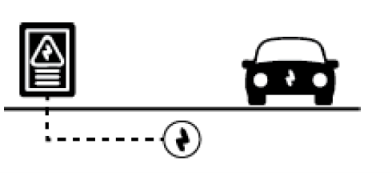
EVSE-CAPABLE SPACE: An off-street parking space with electrical panel capacity and space for a branch circuit dedicated to the parking space that is not less than 20-ampere and 110/120-volt panel capacity for Level 1 charging, or 20 ampere and 208/240-volt for Low-Power Level 2 charging, or 40-ampere and 208/240-volt for Level 2 charging, and is equipped with raceways on conduit, both underground and surface mounted, to enable the future installation of EVSE. For two adjacent EV-capable spaces, a single branch circuit is permitted.
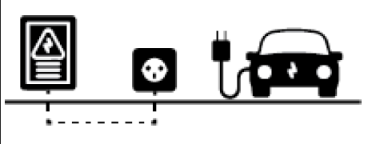
EVSE-READY SPACE: An off-street parking space provided with a full dedicated branch circuit that includes not less than 20-ampere and 110/120-volt panel capacity for Level 1 charging, or 20 ampere and 208/240-volt for Low-Power Level 2 charging, or 40-ampere and 208/240-volt panel capacity for Level 2 charging plus conduit, wiring, receptacle, and overprotection devices terminating in an outlet or receptacle that will support an installed EVSE or support attachment of a charge cord for the vehicle and which is located in close proximity to the location of the parking space. For two adjacent EV-ready spaces, a single branch circuit is permitted. These spaces are “ready to go” as outlets for users who bring their own charging cords or with the addition of an EV charging station (EVSE).
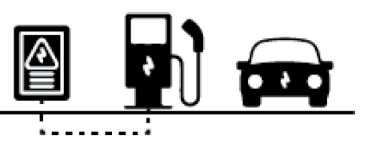
EVSE-INSTALLED SPACE: An off-street parking space with a dedicated branch circuit and EVSE for Level 2 EV charging stations.
EVSE IN USE: For the purpose of determining when to trigger conversion of EVSE-Capable spaces to EVSE-Ready, charging spaces shall be considered “in use” based on the number of units with one or more residents at a multi-family housing development that have informed the owner or management they either are charging or would like to charge an EV at their residence parking.
EVSE PLANNED SPACE: An off street parking space that is included in a plan reviewed and approved by the Planning Board for eventual build-out as an EVSE-Ready space pursuant to Site Plan Review Regulations.
EXCAVATION OF NATURAL EARTH MATERIAL: The removal of natural material is the removal of loam, sand, gravel, stone or other fill material for sale in commercial quantities, or for use in another location.
FAÇADE: The entire area of a building face or building side extending from the roof or parapet to the ground and from one corner of the building to another but does not include any structural or nonstructural elements which extend beyond the roof of a building.
FAÇADE, PRINCIPAL: The façade of a building which is adjacent to or fronts on a public street. Interstate 89 shall not be considered a public street for purposes of identifying the principal façade. If a lot does not have frontage on a public street, then the private road, driveway, or right-of-way that provides vehicular access to the lot shall be considered a public street for purposes of applying Section 608 (“Signs”) to the lot. Except as provided in Section 608.4.A.1.f, for buildings with more than one façade adjacent to or fronting on a public street, the largest of such façades shall be considered the principal façade.
FAMILY: Any number of persons related to each other by blood, adoption, marriage, or civil union, or by a guardianship arrangement, such as foster care, along with not more than three (3) unrelated individuals, living together as a single housekeeping unit; or, not more than four (4) persons not related to each other by blood, adoption, marriage, or by civil union, living together as a single housekeeping unit. A single housekeeping unit means that all such persons have common access to, and common use of, living, cooking, and eating areas within the dwelling unit; provided, however, that an owner or landlord may designate some living areas in the dwelling unit as private. This term shall not include any group residence, lodging house, hotel, or motel as defined herein.
FAMILY DAY CARE HOME: This term shall have the meaning as set forth in RSA 170-E:2, IV(a), as amended.
FAMILY GROUP DAY CARE HOME: This term shall have the meaning as set forth in RSA 170-E:2, IV(b), as amended.
FLAG LOT: A lot that has access to a street by means of a narrow strip of land.
FINANCIAL INSTITUTION: An establishment where the principal business is the receipt, disbursement or exchange of funds and currencies, such as: banks, savings and loans, or credit unions. This term shall not include pawn shops, payday lending establishments, brokerage firms, and stand-alone ATMs.
FRONTAGE: The width of a lot measured along its common boundary with the street line.
FRONTAGE, PRINCIPAL: The side of the lot that abuts the street that generally functions as the primary orientation of residences, businesses, or other uses along the block. When a lot abuts more than one street, the principal frontage is situated along the street that carries the greatest volume of pedestrian and vehicle traffic.
FRONT BUILDING LINE: A line parallel to a lot line transecting that point in the building facade which is closest to the front lot line, except for minor projections as provided in Article II.
GOLF COURSE: A tract of land for playing golf, including tees, greens, fairways, and hazards. The same tract of land may also include a variety of golf uses such as driving ranges, miniature golf, and putting greens.
GROSS FLOOR AREA: The total square footage of all floors of a building as measured using exterior building dimensions. For purposes of calculating minimum parking requirements per Section 607.2.A, “gross floor area” shall mean the total square footage of all floors devoted to the use, or accessory to that use, as measured using exterior building dimensions.
GROSS LIVING AREA: The total area of residential space within a dwelling unit as measured using exterior building dimensions, with a ceiling height of 7 ft. or greater, excluding unheated areas such as garages, enclosed or open porches, covered or open decks, outside stairs, balconies, and other unenclosed areas. The floor area of a walk-out basement with a ceiling height of 7 feet or greater shall be included.
GROUND COVER: Any herbaceous plant which normally grows to a mature height of 4 feet or less.
GROUND-MOUNTED SOLAR ENERGY SYSTEM: A solar energy system of any size that is either permanently or temporarily mounted to the ground.
GROUP DAY CARE FACILITY: A group day care facility is either a child day care facility or an adult day care facility.
- A. CHILD DAY CARE FACILITY: A day care center, a day nursery, a private nursery school or kindergarten, a child development center, a play group, a head start center, or any other facility which cares for seven (7) or more children under the age of 16 for a part but not all of a 24 hour day. This term shall not include primary/secondary educational facilities. Such facilities may be privately operated or sponsored by a house of worship, social agency, cooperative group or a community or by a public agency other than public schools.
- B. ADULT DAY CARE FACILITY: A public or privately operated day care center, therapeutic program, or other facility which provides daily restorative care to adults who either live alone or with others and who need, due to aging process and/or disease progression, on-going consistent stimulation, reinforcement, and reality orientation to continue to actively participate in activities of daily living in order to prevent progressive deterioration, reliance on other for care, or nursing home placement.
GROUP RESIDENCE: A shared home for seniors, an orphanage, children's home or similar type of group living accommodations. All such facilities shall be licensed by the State of New Hampshire and shall serve a maximum of 12 residents. A group residence may consist of multiple buildings per Section 205.3.
HAWKER: The terms "hawker" and "peddler" shall mean and include any person, either principal or agent, who travels from town to town or from place to place in the same town selling or bartering, or carrying for sale or barter to exposing therefore, any goods, wares, or merchandise, either on food or from any animal, cart, or vehicle.
HEALTH CLUB: An establishment that provides indoor and/or outdoor exercise facilities, programs, instruction and/or training related to fitness, wellness, aerobics, weight lifting, court sports, and/or swimming, and which may also include locker rooms, showers, massage rooms, saunas, and/or related accessory uses. This term shall not include any local government use.
HEN: A female chicken.
HIS: High Intensity Soils Mapping as defined according to the standards of the Society of Soils Scientists of Northern New England. See SSSNENE Publication No. 1 and Appendix B.
HOME BUSINESS: Any business carried on in the home which complies with Section 600.
HORSE STABLES: Facility that includes large animal enclosures, barns, riding arenas, corrals, paddocks, and pens used for the raising, training, rehabilitation, and riding of horses or commercial purposes.
HOSPICE: A building having architectural style similar to a dwelling, lodging house or small motel/ hotel which provides temporary lodging for those who receive care or treatment at nearby medical facilities and their families.
HOSPITAL: A place for the diagnosis, treatment or care of human ailments, licensed for inpatient care by the State of New Hampshire, and its subsidiary structures located on the same lot as the primary facility, including, but not limited to: clinics, medical offices, laboratories and support buildings.
HOTEL: A building designed for or used commercially as more or less temporary living quarters for persons who are lodged with or without meals in which are ten or more sleeping rooms usually occupied singularly or by families of transients.
ILLUMINATION: A source of any artificial or reflected light, either directly from a source of light incorporated in or indirectly from an artificial source, so shielded that no direct illumination from it is visible elsewhere than on and in the immediate vicinity of the sign.
ILLUMINATION, EXTERNAL: Illumination of a sign that is affected by an artificial source of light not contained within the sign itself.
ILLUMINATION, INTERNAL: A light source that is concealed or contained within the sign and becomes visible in darkness through a translucent surface.
INSTREAM FLOW: The amount of water flowing in a natural streambed or channel on an average annual basis.
INVASIVE SPECIES: Plant species that have been identified by the NH Department of Agriculture as being so pervasive and noxious as to cause detriment to native flora and fauna, these listed by the Department of Agriculture’ s Market and Foods Program at the following website, http://www.nh.gov/agric/divisions/plant_industry/documents/invasive-species.pdf as amended.
IMPERMEABLE COVERAGE: All that horizontal area of a lot, parcel or tract which cannot be penetrated by rainwater because of manmade alterations to the natural surface of the land, including building, parking, and driveway areas.
INPATIENT REHABILITATION FACILITY: A medical facility licensed by the State of New Hampshire to provide intensive rehabilitative services to patients with complex conditions requiring daily therapy and, in some instances, overnight stays. Such facilities must be primarily focused on providing hospital-level care and intensive rehabilitation after an illness, injury or surgery. The term “inpatient rehabilitation facility” shall not include a hospital or nursing home. The term “inpatient rehabilitation facility” shall also not include a drug and/or alcohol rehabilitation facility unless such drug and/or alcohol rehabilitative services are incidental and secondary to the primary rehabilitative services provided to a patient after an illness, injury or surgery.
ITINERANT VENDOR: Any person, either principal or agent, who engages in a temporary or transient business either traveling from place to place, selling goods, wares and merchandise from stock or by sample for future delivery, and who, for the purpose of carrying on such business, hires or occupies a temporary place of business. A "temporary place of business" means any public or quasi-public place including, but not limited to, a hotel, motel, rooming house, storeroom, building, part of a building, tent, vacant lot, railroad car, or trailer temporarily occupied for the purpose of making retail sales of goods to the public.
JUNKYARD: This term shall have the meaning as set out in RSA 236:112 as amended.
KENNEL: any establishment wherein or whereupon the business of boarding or selling dogs, or breeding dogs for sale is carried on, except for a pet shop.
LEVEL 1: (which is not mandated but is included here for informational purposes): Charging level for EVs that operates on a dedicated 20-amp breaker (same kind used for conventional electrical outlets in most buildings) on a 110- or 120-volt AC circuit while drawing 1.9-3.2 kW to supply approximately 2-5 miles of range gained per hour of charging.
LEVEL 2: Charging level for EVs that operates on a dedicated 40-100 amp breaker (same kind used by a clothes dryer or stove) on a 208 or 240 volt AC circuit while drawing 6.2+ kW to supply 19+ miles of range gained per hour of charging.
LEVEL 3: Fast or rapid charging level for EVs that operates on a 100 amp or higher breaker on a 480 volt AC electric circuit or higher three-phase circuit with special grounding equipment and mounting on an equipment pad.
LIGHT INDUSTRY: The assembly, manufacture, processing, packaging or other industrial operations conducted in such manner that all resulting cinders, dust, fumes, gas, odors, smoke and vapor are effectively confined to the premises or disposed of so as to avoid any air pollution and conducted in such a manner that noise, flashing lights and vibrations will not be a nuisance or otherwise detrimental to abutting properties. Light industry includes the development and production of computer software and hardware and its associated equipment.
LOAD MANAGEMENT: A process for actively controlling the consumption of electricity to ensure power demand stays within the design limits of electrical infrastructure (e.g. devices, circuit wiring, breakers, panels, and transformers). A secondary purpose of load management may be to minimize the cost of such electricity demand and any needed capacity upgrades.
LOCAL GOVERNMENT USE: Any use of land or structure by the City of Lebanon or any other political subdivision of the State of New Hampshire.
LODGING HOUSE: Any dwelling in which living accommodations without individual kitchen facilities are rented to five (5) or more nontransient guests. A boarding or rooming house shall be deemed a lodging house.
LOT: A single unit or parcel of land in the same ownership throughout, with ascertainable boundaries and undivided by a street.
LOT AREA: The horizontal area of the lot lying within the lot lines, exclusive of any area in a street right-of-way.
LOT OF RECORD:
- (1) A lot which is shown as a separate lot, tract or parcel of land on a subdivision plat lawfully recorded in the office of the County Register of Deeds, as long as subdivision approval has not been revoked under RSA 676:4-a, nor the lot merged with any adjoining lot under RSA 674:39-a;
- (2) A lot or parcel whose separate metes and bounds description has been lawfully so recorded, which had, at some point in its chain of title, ownership separate from that of any contiguous land described in the same document, and which has not been merged with any contiguous land under RSA 674:39-a, nor used or developed conjointly with any commonly-owned contiguous parcel in a manner implying abandonment of the common lot line.
LOT WIDTH: The distance measured across the rear line of the required front yard providing that at least 22 feet exist along the street line.
LOW-POWER LEVEL 2: Charging level for EVs that operates on a dedicated 20-amp breaker (or two 20-amp outlets sharing a 40-amp breaker with some form of load management that limits total load on the circuit to 32 amps) on a 208- or 240-volt AC circuit while drawing 3.3-6.1 kW per 20 amps to supply approximately 10+ miles of range gained per hour of charging.
MANUFACTURED HOUSING PARK: Any tract of land on which two or more manufactured housing units are parked and occupied for living purposes. A manufactured housing park may also include in whole or in part modular homes of any size up to 1,400 sq. ft. in size.
MANUFACTURED HOUSING PURD: A Planned Unit Residential Development (PURD) for two or more manufactured housing units and consisting exclusively of manufactured housing. A manufactured housing PURD may also include in whole or in part modular homes of any size up to 1,400 sq. ft. in size.
MANUFACTURED HOUSING: This term shall have the meaning as set out in RSA 674:31, as may be amended.
MEDICAL CENTER COMPLEX: A medical center complex having as its primary facility a hospital as defined in this Ordinance. It may also include subsidiary uses located within the boundaries of the medical center complex.
MEDICAL RESEARCH FACILITY: A medically related research laboratory, which may as a subsidiary function, engage in the manufacture of products within the following Standard Industrial Classifications: biological products; medicinal chemicals; pharmaceutical preparations; optical instruments and lenses; and surgical and medical instruments.
MEMBERSHIP CLUB: Building or use catering to club members and their guests for recreational and social purposes and not operated primarily for profit.
MIXED USE: A development or principal building having two (2) or more of the uses allowed within the Zoning District in which it is located.
MOBILE FOOD SERVICE VENDING: The preparation and/or dispensation of food or beverages by a mobile food service vendor from a mobile food service unit for immediate service and/or consumption.
MOBILE FOOD SERVICE VENDOR(s): Any person, including an employee or agent of another, who prepares and/or dispenses food or beverages from a mobile food service unit for immediate service and/or consumption.
MOBILE FOOD SERVICE UNIT: Any vehicle that is (a) self-propelled or that can be pulled or pushed down a street or sidewalk and (b) utilized by a mobile food service vendor for the purpose of preparing and/or dispensing food or beverages for immediate service and/or consumption.
MOTEL: A building or group of buildings containing rooms or living quarters in separate units, designed for or used principally for providing temporary living accommodations for automobile travelers on a rental basis, and generally providing nearby automobile parking space serving such rooms or units.
MULTI-TENANT BUILDING: A building containing four (4) or more separate commercial uses.
NON-CONFORMING BUILDING (STRUCTURE): Any building or structure, in whole or part, which does not conform to the regulations of the district in which the building or structure is located.
NON-CONFORMING LOT: Any lot which does not conform to the lot area, frontage or lot width requirements of the district in which it is located.
NON-CONFORMING USE: Any use of land and/or a structure that does not conform to the provisions of the district in which it is located.
NON-RESIDENTIAL TRUCK DELIVERIES: See "Truck Deliveries, Non-Residential."
NURSING HOME: This term shall have the same meaning as “nursing facility” as set forth in RSA 151-E:2, as amended, except that the term "nursing home" does not include "rehabilitation services for the rehabilitation of injured chronically disabled or sick" as defined by RSA 151-C:2.
OFFICE: A room or group of rooms used for the carrying on, conducting or managing of a business or for the practice of a profession. This term includes, but is not limited to: offices for lawyers, engineers, architects, attorneys, accountants, insurance, real estate, or investment agencies, or any similar type of profession, as well as medical offices including offices of a physician, dentist, psychologist, optometrist or other licensed health care provider, which does not include any hospital or ambulatory surgical care facilities.
ORDINARY HIGH WATER MARK: The line on the shore, running parallel to the main stem of the river, established by the fluctuations of water and indicated by physical characteristics such as a clear, natural line impressed on the immediate bank, shelving, changes in the character of the soil, destruction of terrestrial vegetation, the presence of litter and debris, or other appropriate means that consider the characteristics of the surrounding areas.
OUTDOOR STORAGE: Storage not in a structure, provided that any storage material other than new equipment, new building material or other new products displayed for sale is fenced or screened.
PARAPET: That portion of a building wall that rises above the roof level.
PARKING AREA: Any part of a lot that is used for parking, other than driveways and areas necessary for vehicles to maneuver into or out of parking spaces. If a driveway is wide enough to provide both parking spaces and a circulation/ access land adjacent to the parking spaces, the part of the driveway used for parking spaces shall be considered a parking area.
PARKING FACILITY: A paved parking area or parking structure available to the public, with or without payment of a fee.
PARKING SPACES, OFF-STREET: For the purpose of these regulations, an off-street parking space shall consist of a space adequate for parking an automobile with room for opening doors on both sides, together with properly related access to a public street or alley and maneuvering room. Except for a two-family dwelling or a one-family dwelling with an ADU, required off-street parking areas for three or more automobiles shall have individual spaces marked, and shall be so designed, maintained, and regulated that no parking or maneuvering incidental to parking shall be on any public street, walk, or alley, and so that any automobile may be parked without moving another.
PARKING STRUCTURE: A structure designed to accommodate vehicular parking spaces that are fully or partially enclosed or located on the deck surface of a building. A parking structure includes parking garages, deck parking, and underground or under-building areas for parking.
PEDDLER: See "hawker."
PERSONAL SERVICE: Establishments providing frequent or recurrent services related to personal needs, and including accessory retail sales of products related to the services offered. Examples include beauty and barber shops, nail salons, tanning salons, massage services, clothing rental, tailors, garment and shoe repair shops, photographic studios, and similar businesses. The term shall not include laundromats and dry cleaning establishments.
PLANNED BUSINESS PARK: A development approved by the Planning Board for a tract of land at least 50 acres in size which provides for a designated mix of office, commercial and light industrial uses. (See Section 508)
POLLUTION: The contamination or alteration of the physical, biological, or chemical properties of wetland or water resources from the discharge or deposition of any waste or other materials. This includes, but is not limited to, sewage and sediment.
PRINCIPAL BUILDING (OR STRUCTURE): The building (or structure) which houses the principal use of a lot.
PRINCIPAL USE: The primary purpose for which a lot or structure is used.
PRODUCE STAND: Sale of flowers, garden supplies, or agricultural produce designed to serve highway customers.
PUBLIC RECREATION FACILITY: A recreational facility owned by federal, state or local government.
PUBLIC RIVER: All year-round flowing rivers or streams, as shown on the current version of the US Geological Survey 7.5 topographic maps.
PUBLIC SAFETY FACILITY: A building, structure, or use of land built or installed by a public agency for the protection of the public from injury and dangers.
RECOVERY HOUSE: As defined in RSA 153:10-d, II, as the same may be amended: a residence that provides a safe, healthy, family-like, substance free living environment that supports individuals in recovery from addiction and is centered on peer support and a connection to services that promote long-term recovery; provided that “recovery housing” shall not include a halfway house or any other facility requiring a license pursuant to RSA 151.
RECREATIONAL FACILITY, INDOOR: An indoor recreational facility including, but not limited to, tennis courts, swimming pools, ice or roller skating, track and field facilities, squash or handball courts, other than those accessory to a dwelling.
RECREATIONAL FACILITY, OUTDOOR: Outdoor recreational activities, including such facilities as outdoor tennis courts, swimming pool, golf courses, play fields, and similar uses. No buildings shall be allowed except for the necessary related uses such as restrooms and maintenance facilities, other than those accessory to a dwelling.
RECREATIONAL VEHICLE (RV): Any of the following vehicles:
- (1) Motorhome or van, which is a portable, temporary dwelling to be used for travel, recreation and vacation, constructed as an integral part of a self-propelled vehicle.
- (2) Pickup camper, which is a structure designed to be mounted on a truck chassis for use as a temporary dwelling for travel, recreation, and vacation.
- (3) Recreational trailer, which is a vehicular, portable structure built on a single chassis, 400 square feet or less when measured at the largest exterior horizontal projections, calculated by taking the measurements of the exterior of the recreational trailer including all siding, corner trim, molding, storage space and area enclosed but windows by not the roof overhang. It shall be designed primarily not for use as a permanent dwelling, but as a temporary dwelling for recreational, camping, travel or seasonal use.
- (4) Tent trailer, which is a canvas or synthetic fiber folding structure, mounted on wheels and designed for travel, recreation, and vacation purposes.
RENEWABLE ENERGY SYSTEM: A system for collecting, generating, or storing useful thermal, electrical, chemical, or mechanical energy from renewable energy as that term is defined in RSA 125-O:2, VIII, or a renewable source as that term is defined in RSA 362-F:2, XV.
RESEARCH LABORATORY: A facility for scientific research, development, analysis, and testing in various technology-intensive fields of science including but not limited to biotechnology, pharmaceuticals, genetics, plastics, polymers, resins, coatings, fibers, fabrics, films, heat transfer, and electronics.
RESTAURANT: The term includes diners, cafes, and cafeterias and does not include drive-in restaurants. It shall be an eating establishment which is primarily designed for its patrons to eat at tables, booths or a counter. Take-out refreshments are only incidental to the main purpose of the establishment.
RETAIL PRODUCT PICK UP: A location, whether used permanently, intermittently, or temporarily, for the delivery and pickup of retail goods or products purchased off-site.
RETAIL STORE: The term includes shops and stores for the sale of retail goods and department store; and does not include any drive-in service, free-standing retail stand, gasoline service and motor vehicle repair service, new and used car sales and service, trailer and manufactured home sales and service and personal services.
RIDING FACILITY: an establishment where horsemanship and riding is taught.
RIPARIAN: Belonging or relating to the bank of a river or stream.
SAPLING: Any woody plant which normally grows to a mature height greater than 20 feet and has a diameter less than 6 inches at a point 4 2 feet above the ground.
SAWMILL: Sawmill operations or forest produce manufacture in structures.
SECURE ENCLOSURE: A fence or other form of secure enclosure that will prevent animals from walking, jumping or flying out.
SENIOR HOUSING COMPLEX: A housing complex exclusively occupied by persons who are at least 55 years old. Such a complex may include one or more dwellings of single, two or multi-family type. It may also include congregate living facilities by special exception (see Section 603).
SEPTIC SYSTEM: Any structure or series of structures that are designed to store, treat, and purify waters that contain human waste.
SERVICE AREA: The area adjacent to a building entrance, usually in the rear, through which supplies are received and waste materials are moved.
SERVICE STATION: A business primarily concerned with the retail sale of fuel, oil, grease, related automotive products and/or minor mechanical repairs and services to automobiles.
SETBACK: See "Yard."
SETBACK LINE: A line paralleling the boundary line of a lot located at a distance from the boundary line that is equal to the applicable minimum yard requirement.
SHADE COVERAGE: The percentage of land area covered by leaves, branches, and stems of canopy/shade trees when viewed by above during the summer. New plantings should be measured based on their size at maturity.
SIGN: A structure or an image, display, or illustration which is affixed to, painted or represented directly or indirectly upon a building, structure or parcel of land, which is (a) visible from a public street, private street, or an adjoining property, and (b) designed to communicate a non-artistic message. “Sign” does not include the sign structure unless the sign structure forms an integral part of the sign display or is used to differentiate the sign from the background against which it is placed.
SIGN AREA: Sign area means the entire area within a geometric form enclosing the extreme limits of writing, representation, emblem or any other figure of similar character, together with any frame, structure, or other material or color forming an integral part of the display or used to differentiate the sign from the background against which it is placed. The geometric form shall be limited to a circle, triangle or parallelogram. Where a sign has two or more faces, the area of all faces shall be included in determining the area of the sign, except where two such faces are placed back to back and are at no point more than two feet from one another, the area of the sign shall be taken either as the area of one face – if the two faces are of equal area, or the area of the larger face – if the two faces are of unequal area.
SIGN, DIGITAL: A non-static sign or portion of a sign that changes appearance by any electronic process or remote control.
SIGN, COMMERCIAL: A sign that names, advertises, or calls attention to a business, product, service, or other commercial activity.
SIGN, FREESTANDING: A sign supported by one or more uprights, posts, or bases placed upon or affixed in the ground and not attached to any part of a building.
SIGN, FREESTANDING DIGITAL: A freestanding sign that incorporates a digital sign.
SIGN, NON-COMMERCIAL: A sign that does not name, advertise, or call attention to a business, product, service, or other commercial activity.
SIGN, NON-STATIC: Any sign that incorporates a technology or method allowing the sign or any component of the sign to change appearance without having to replace the sign or any component of the sign either physically or mechanically. This definition also includes a sign or any component of a sign that rotates, revolves, moves, blinks, flashes, and/or incorporates LED lights manipulated through digital input; any illuminated sign or component of a sign which changes the intensity or color of illumination; and digital signs.
SIGN, OFF-PREMISE: A sign which pertains to a use or activity occurring on a lot other than the lot on which the sign is located.
SIGN, PORTABLE: Any sign that is designed to be transported, including but not limited to the following:
- 1. Signs with wheels removed.
- 2. Signs with chassis or support constructed without wheels.
- 3. Signs designed to be transported by trailer or wheels.
- 4. Temporary signs.
SIGN, PROJECTING: A sign attached perpendicularly to a building wall.
SIGN, ROOF: A sign painted, erected, constructed or maintained on the roof of a building.
SIGN, SANDWICH BOARD: A free standing, temporary a-frame freestanding sign having a message on both sides.
SIGN STRUCTURE: The necessary supports or uprights on which a sign is placed.
SIGN, TEMPORARY: Any sign which (a) is intended to be displayed for a reasonably short and definite period; (b) has the overall appearance of being intended to be displayed for a short and definite period; and (c) is made of paper, cloth, canvas, plastic sheet, cardboard or similar impermanent materials. No such temporary sign shall be erected for a period of greater than six (6) months cumulatively within a twelve (12) month period.
SIGN, WALL: A sign painted on or attached to a wall of a building and in the same plane as the wall.
SOLAR ENERGY SYSTEM: A device or system designed to collect, store, and distribute solar energy for space heating or cooling, electricity generation, or water heating.
SOLAR LAND COVERAGE: The sum total area (length times width) of the solar panels for the solar energy system to be installed on the property. This definition does not include components of the solar energy system including but not limited to mounting equipment and ancillary components of the system; nor does it include access roads or fencing. This definition is not to be interpreted as a measurement of impervious surface.
SPECIAL EXCEPTION: A use of a building or lot which may be permitted under this Ordinance only upon application to the Board of Adjustment and subject to the approval of the Board in accordance with provisions explicitly set forth herein.
STAND: Any newsstand, table, bench, booth, rack, handcart, pushcart, or any other fixture or device which is not required to be licensed and registered by the NH Department of Motor Vehicles, used for the display, storage, or transportation of articles offered for sale by a stand vendor.
STAND VENDOR(s): Any person, including an employee or agent of another, who sells or offers to sell food, beverages, goods, or merchandise from a stand with a vendor license issued by the City.
STAND VENDING: The sale of food, beverages, goods, or merchandise from a stand.
STORY: The complete horizontal division of a building, comprising the usable space or room(s) on one level. Each such division is considered one full story.
STORY, STREET LEVEL: The story having its floor elevation closest to the elevation of the adjacent street or any story partially below the elevation of the adjacent street and having six (6) feet or more of its height above the elevation of the street.
STREET LINE: Right-of-way line of a street as dedicated by subdivision plat or a deed of record. Where the width of the street is not established, the street line shall be considered to be 25 feet from the centerline of the street pavement.
STREET OR PUBLIC STREET: A public right-of-way which the town or state has the duty to maintain regularly or a right-of-way shown on a subdivision plat approved by the Planning Board and recorded with the County Registry of Deeds which provides the principal means of access to abutting property.
STRIP PLAZA: A linear group of commercial uses under unified control consisting of four (4) or more separate commercial establishments sharing a common building, or which are in separate buildings that share a common entranceway or parking area.
STRUCTURE: Anything constructed or erected with a fixed location on the ground, or attached to something having a fixed location on the ground. The term includes, but is not limited to, buildings, swimming pools, tennis courts, manufactured homes, wind and solar energy facilities, satellite dishes and antenna. The term does not include bus stops and minor installations such as fences less than three and a half feet high, agricultural and safety fences, mail boxes, flagpoles and children's play equipment, nor does it include subsurface waste disposal systems.
TELECOMMUNICATION FACILITIES: A personal wireless service facility, as defined in the federal Telecommunications Act of 1996, as amended. Such facilities generally include, but are not limited to, a tower, mount, antenna, equipment shelter, fencing and other related equipment. A telecommunication facility is not a commercial broadcast radio or television station antenna or tower.
TOURIST HOME (OR BED & BREAKFAST FACILITY): Any dwelling (other than a hotel or motel) in which living accommodations without kitchen facilities are rented to ten or fewer transient guests for more than 12 days per year.
TRADITIONAL SUBDIVISION: Any subdivision of land which meets all applicable dimensional requirements of the zoning district in which it is located and is not approved as either a PUD per Section 501 or a planned business park per Section 508.
TREE: Any woody plant which normally grows to a mature height greater than 20 feet and which has a diameter of 6 inches or more at a point 4 ½ feet above the ground.
TRUCK DELIVERIES, NON-RESIDENTIAL: Deliveries by vehicles representing businesses such as Federal Express, United Parcel Service, courier services and the like.
TRUCK TERMINAL: A truck terminal shall be allowed to have facilities for transfer of merchandise, repair, maintenance, and servicing of trucks and trailers and indoor and outdoor storage of equipment including tractors, trucks, and trailers. Any outdoor storage shall be fenced or screened.
VARIANCE: Such departure from the terms of this Ordinance as the Board of Adjustment, upon appeal in specific cases, is empowered to authorize under the terms of Section 801.2 and applicable statutes of the State of New Hampshire.
VEHICULAR REPAIR: The repair or maintenance of motor vehicles, motorcycles, recreational vehicles, manufactured homes, boats, heavy equipment and farm machinery. No retail sale of gasoline or oil is permitted.
VEHICULAR SALES: The display and sales of new or used motor vehicles, motorcycles, recreational vehicles, manufactured homes, and boats. No retail sale of gasoline or oil is permitted. Vehicular sales shall include facilities for the short term leasing of automobiles and trucks to the end consumer.
VENDOR(s): Any person who is a mobile food service vendor or stand vendor.
WAREHOUSE: Includes warehouse (and self-storage warehouse) wholesale establishment, bulk storage and bulk sales outlet.
WATER RESOURCE PROFESSIONAL: A person who has been formally trained and who has experience in the management, treatment, and/or planning relative to water resources such as streams, rivers, ponds, lakes, and wetlands.
WAY: Any pubic highway, street, avenue, road, alley, park or parkway, or any private way laid out under authority of statute, and ways provided and maintained by public institutions to which state funds are appropriated for public use, to any public or private parking facility which is maintained primarily for the benefit of paying customers.
WETLAND BUFFER: An area adjacent to wetlands that in its undisturbed and natural condition, is integral to the performance and protection of wetland functions and values.
WETLANDS: All areas within the Wetlands Conservation District as defined by Section 401.2, 401.3.
WIND ENERGY SYSTEM: A wind energy conversion system consisting of a wind turbine, a tower or pole, and associated mechanical and electrical conversion components.
WINDOW SIGN: Any sign that is affixed to the interior or exterior of the window or windowpanes or within five (5) feet of the interior of the window or windowpanes and is visible from the exterior of the structure.
WORKFORCE HOUSING: This term shall have the meaning as set forth in RSA 674:58, IV, as amended.
YARD (OR SETBACK): That portion of a lot not occupied by a building or structure. Porches, whether enclosed or unenclosed, shall be considered as part of the main building and shall not project into a required yard.
YARD, FRONT (OR SETBACK): Yard between the front lot line and the front of a building extended to the side lot lines of the lot. The depth of the front yard shall be measured from the street line to the front line of the building.
YARD, REAR (OR SETBACK): Yard between the rear lot line and the rear line of a building extended to the side lot lines of the lot. The depth of the rear yard shall be measured from the rear lot line to the rear line of the main building.
YARD SALE: The sale of excess items by a family from its residence to customers coming to the residence to view and purchase the items. It shall include garage, lawn, attic, tag and porch sale, and similar expression intending to convey such type of sales.
YARD, SIDE (OR SETBACK): Yard between the principal building or accessory building and a side lot line, and extending through from the front yard to the rear yard.